
HazMit resource • Updated October 30, 2026
Crawl space vapor barriers and dehumidifiers: do you need both?
Learn when crawl spaces and basements need a vapor barrier, a dehumidifier or both. Address the moisture source with a free HazMit assessment in Indiana.
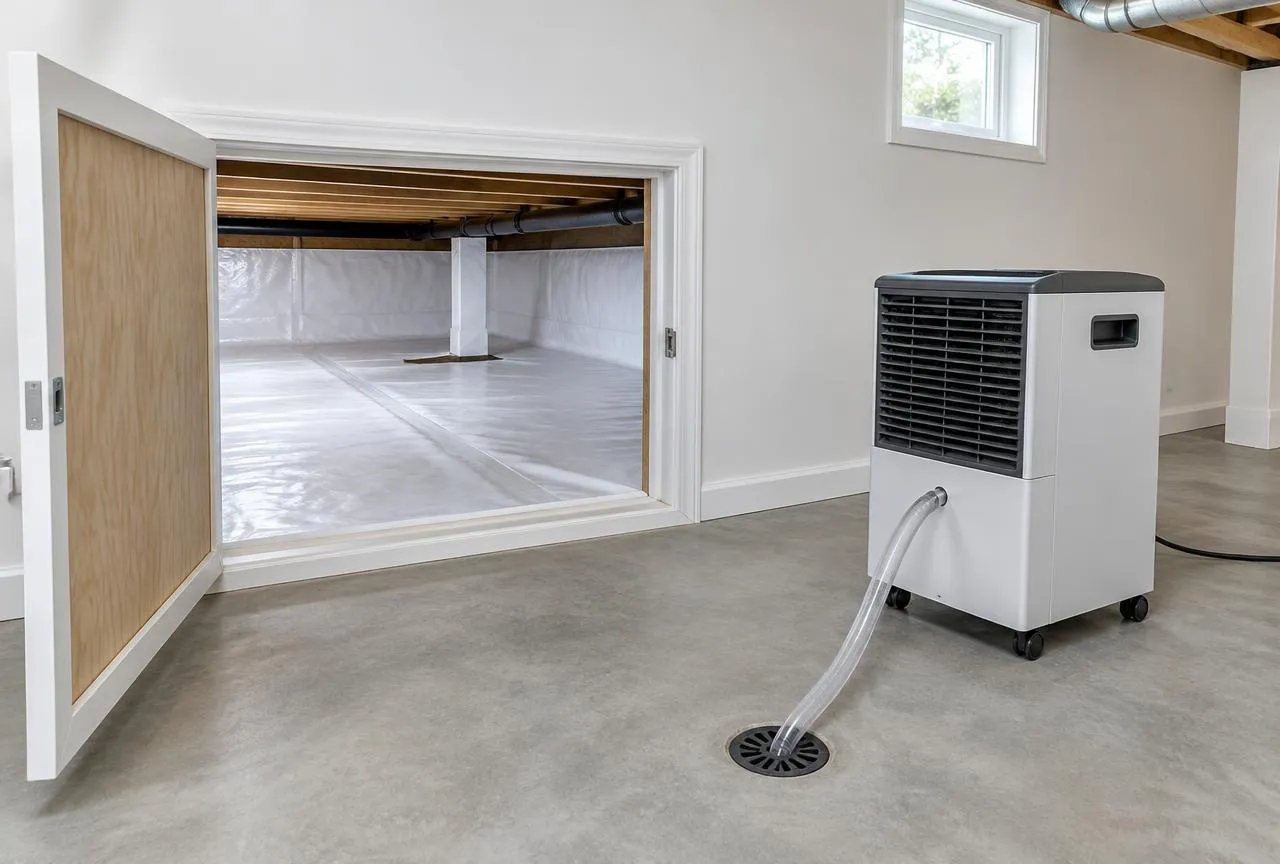
Two products, two different moisture sources
A vapor barrier and a dehumidifier do different jobs. A barrier limits moisture moving from exposed ground into a crawl space. A dehumidifier removes moisture from indoor air. If both ground moisture and humid air affect a property, both measures may be useful. Choosing one based only on which seems cheaper can leave part of the problem unresolved.
Neither product is a replacement for fixing an active leak or standing water. An assessment should consider water entry, drainage, ventilation, damp materials and how the space is used. The prevention plan needs to fit those conditions rather than start with a product package. Mold already present may also need removal before equipment is installed.
What a crawl space vapor barrier does
A vapor barrier is a durable sheet placed over exposed ground and detailed around seams, edges and penetrations to limit moisture movement. Preparation and the condition of the space matter. A loose sheet with open seams or damage can perform very differently from a properly planned installation. Access paths and later maintenance need to be considered too.
The barrier does not pump away water or repair building drainage. If water stands beneath the space or a pipe leaks above it, that cause must be addressed. Work should also avoid trapping conditions that have not been assessed. Explain the water history and any known drainage problems before approving the installation scope.
What a dehumidifier does
A dehumidifier draws moisture from air and collects or drains the resulting water. Correct sizing matters because a unit needs to handle the space and moisture load. Airflow and placement matter too. A unit hidden behind stored items or unable to drain reliably cannot perform as intended. Installation should include a clear drainage plan.
Equipment also needs upkeep. Filters, drainage and operating settings should follow the manufacturer's instructions. EPA recommends indoor humidity below 60 percent, ideally between 30 and 50 percent where possible, as general mold prevention guidance. Those values are not a guarantee that a property is mold-free or a substitute for correcting wet materials and leaks.
Signs you may need a broader moisture plan
Recurring mold, musty odors, condensation and damp stored materials can signal an unresolved moisture source. Seasonal changes can be important. A space may feel dry during one visit but become damp after wet weather or a change in ventilation. Keep records of when the condition appears and which areas are affected.
Basements and crawl spaces can have more than one cause at the same time. Ground moisture, outside water, humid air and plumbing leaks may all contribute. The assessment should avoid assuming that a single appliance solves them all. Specialist building or drainage repairs may be needed alongside the prevention measures HazMit installs.
Remove existing mold before calling it prevention
Prevention products do not remove existing mold or replace damaged materials. Mold remediation may require containment, removal of affected materials and cleaning and treatment of the area. Containment means separating the work from nearby occupied spaces to limit dust spread. The scope depends on the materials and the extent of the problem.
Drying and moisture correction are connected to removal. If wet conditions remain, new growth can occur despite a clean-looking finish. Color alone does not identify a mold species or establish a health risk. If occupants have symptoms or medical concerns, seek healthcare advice while the property conditions are assessed and addressed.
What to ask about installation and price
Ask which moisture source each measure will address. For a vapor barrier, ask about preparation, seams, penetrations and protecting the barrier from later damage. For a dehumidifier, ask about capacity, placement, drainage and upkeep. The written scope should identify separate repair dependencies rather than leaving the owner to discover them after installation.
Pricing depends on area, access, ground condition, materials, equipment requirements and existing contamination. Limited crawl space clearance can change the work. HazMit provides a free assessment and a written price instead of a fixed number that ignores those details. A prevention product should be recommended because it fits the property, not because it is automatically attached to every quote.
Prepare for the assessment
Describe existing pumps, drains, ventilation and any equipment already in place. Tell us if other contractors need access to the crawl space after installation. A prevention plan should accommodate normal maintenance without repeatedly damaging the barrier. Clear responsibilities for cleaning filters, checking drains and reporting new leaks help the installed measures keep doing their intended jobs.
Keep the prevention working
Check for new leaks, damaged barriers and blocked drains. Follow equipment instructions and watch for changes in humidity or condensation. Later plumbing or wiring work can disturb a barrier, so anyone entering the space should know what has been installed. Prevention is a maintained system, not a once-only promise against every future moisture event.
HazMit offers vapor barrier and dehumidifier installation alongside mold remediation in Columbus, Indianapolis, Bloomington and communities across Central and Southern Indiana. If birds have entered an attic or barn on the same property, ask about bird waste cleanup and exclusion too. Request a free on site assessment to connect removal, moisture correction and the right prevention measures for your building.